Arid Canyon
- Houdini 22
- Solaris
- Karma XPU
- MaterialX
- VEX
- Gaea
- Quixel
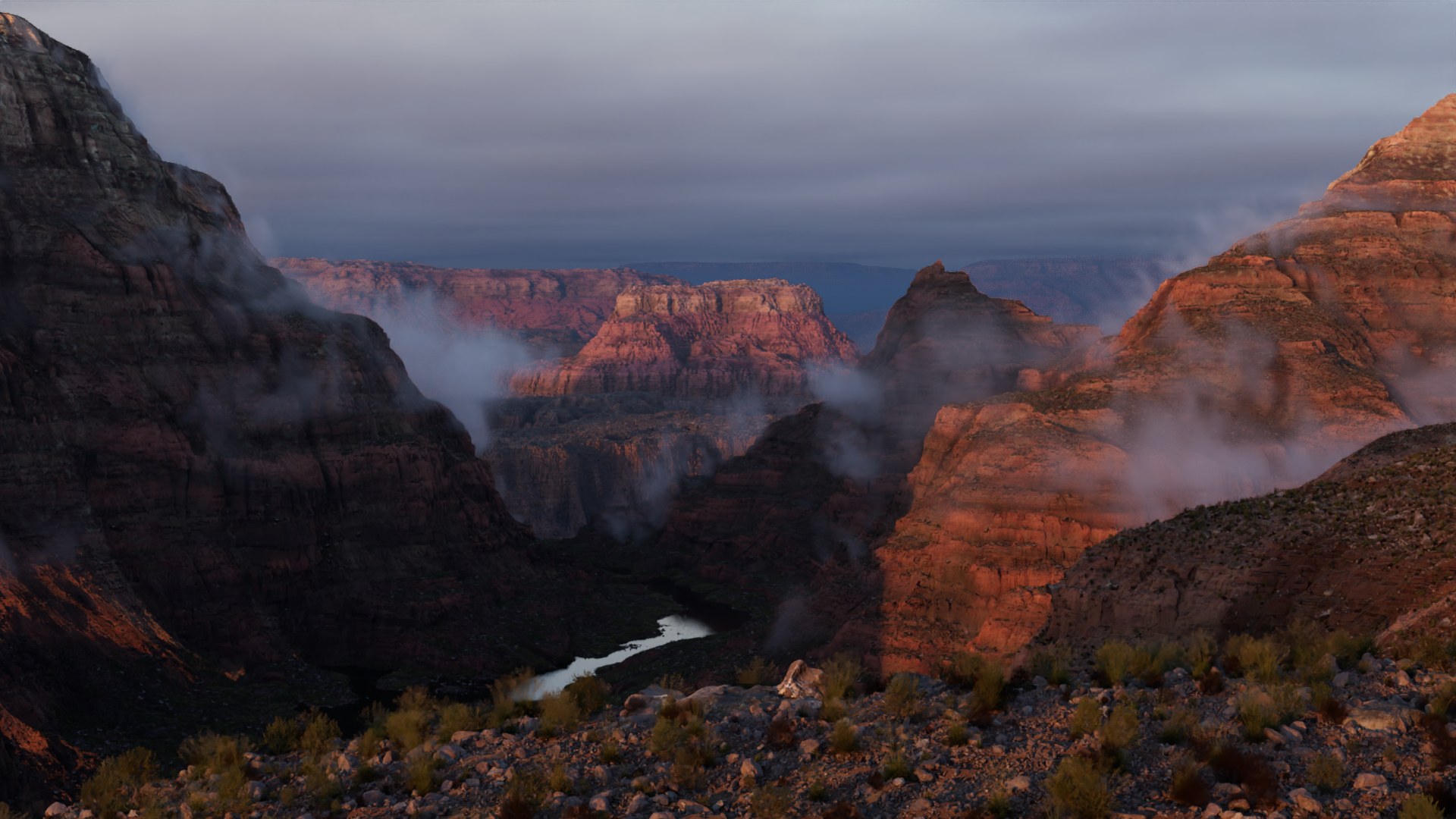
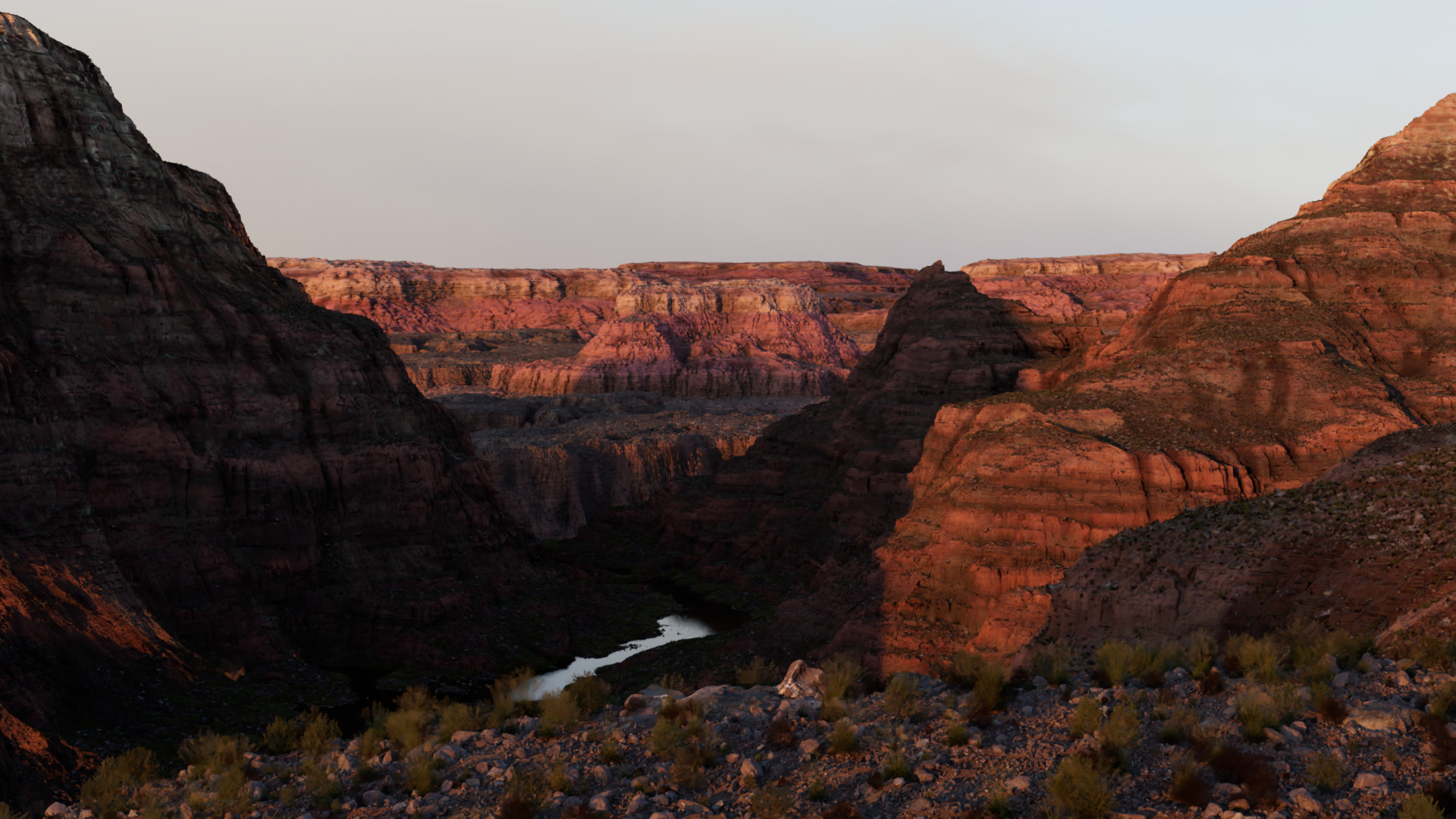
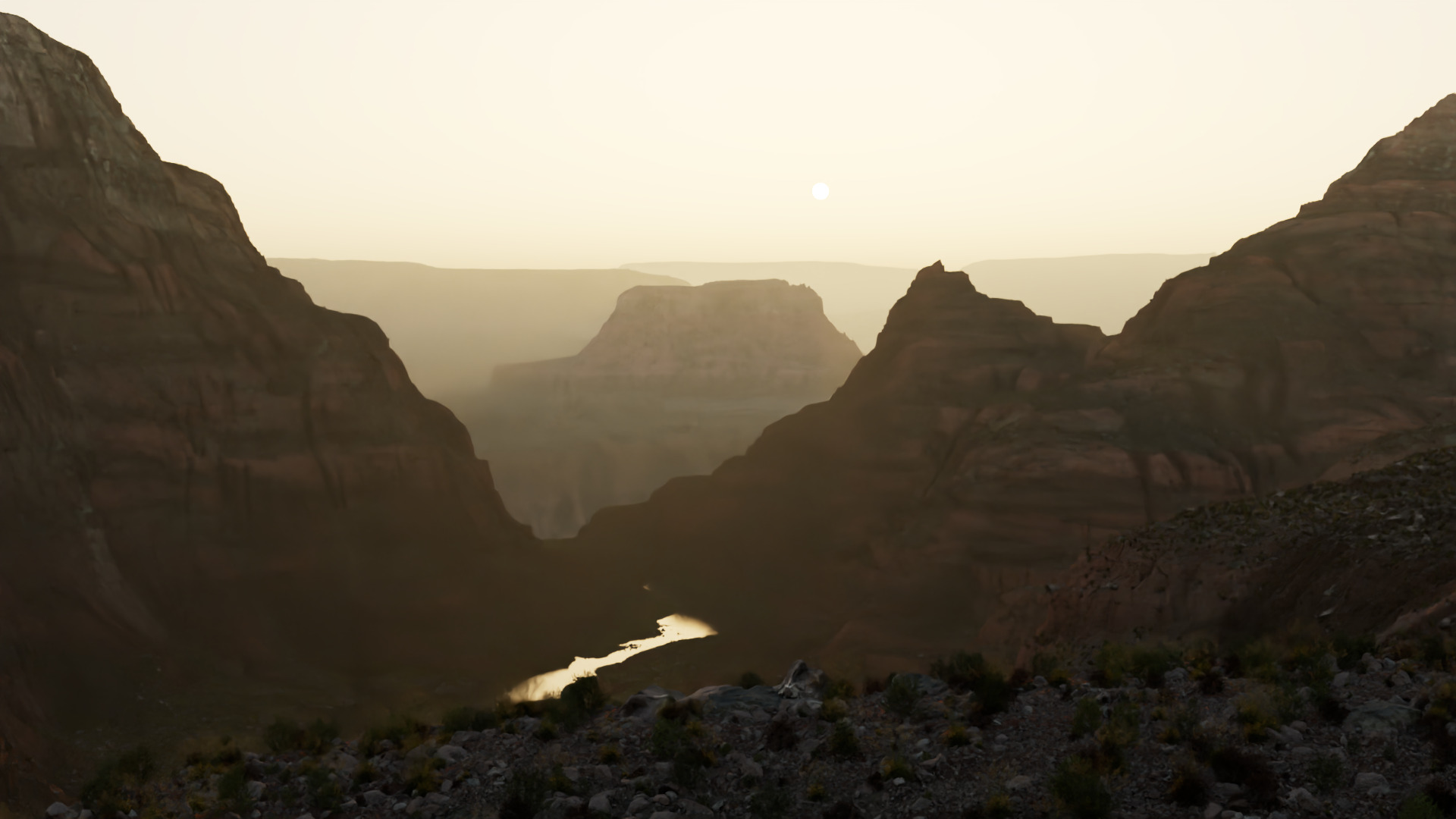
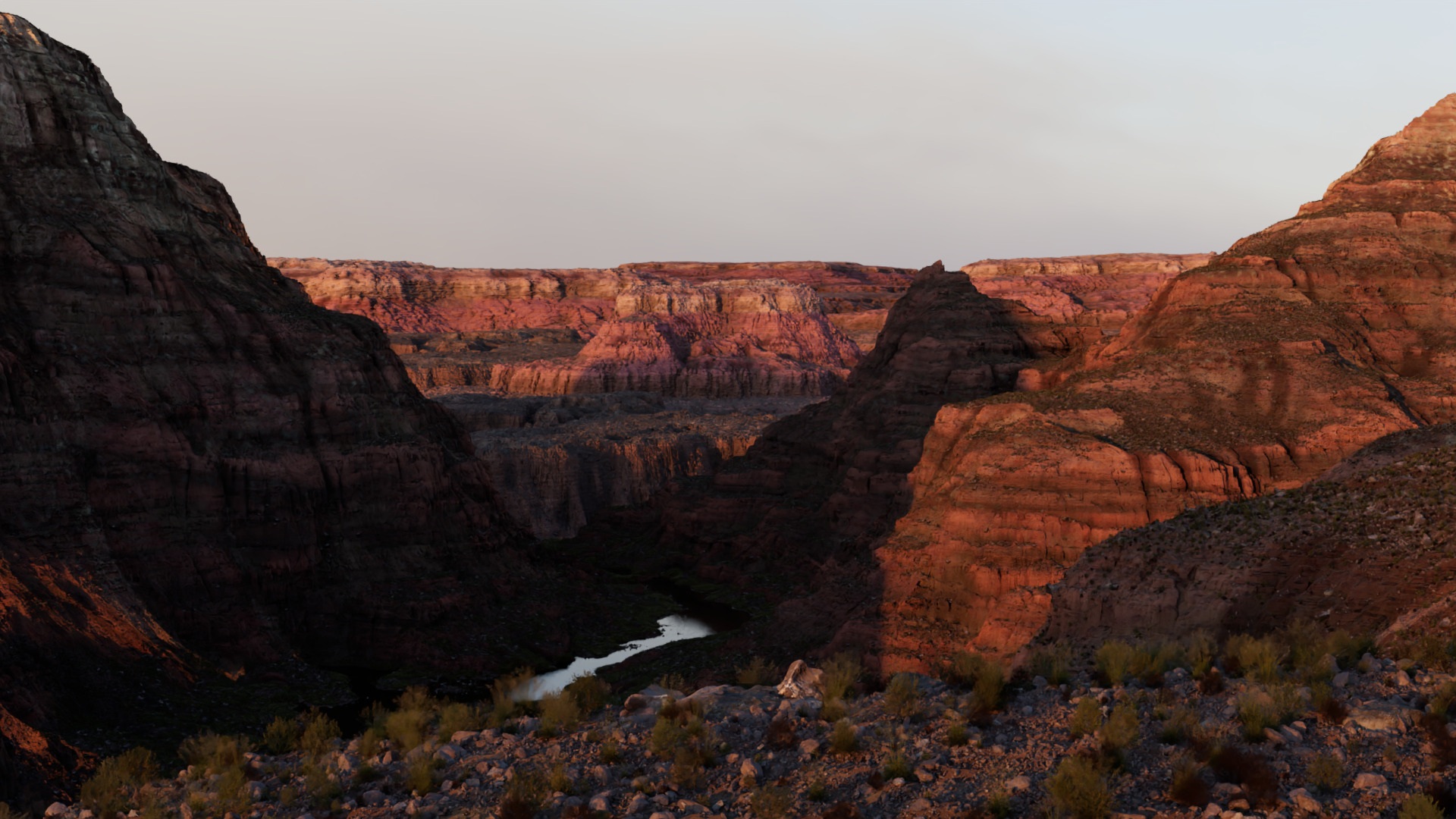
A desert canyon at last light, just after a storm. Built in Houdini for a single camera, with the surface and the weather rendered as separate passes.
Breakdown
The shot, taken apart
Layout around the camera, then the hero frame built up layer by layer.
Layout
Built for one camera
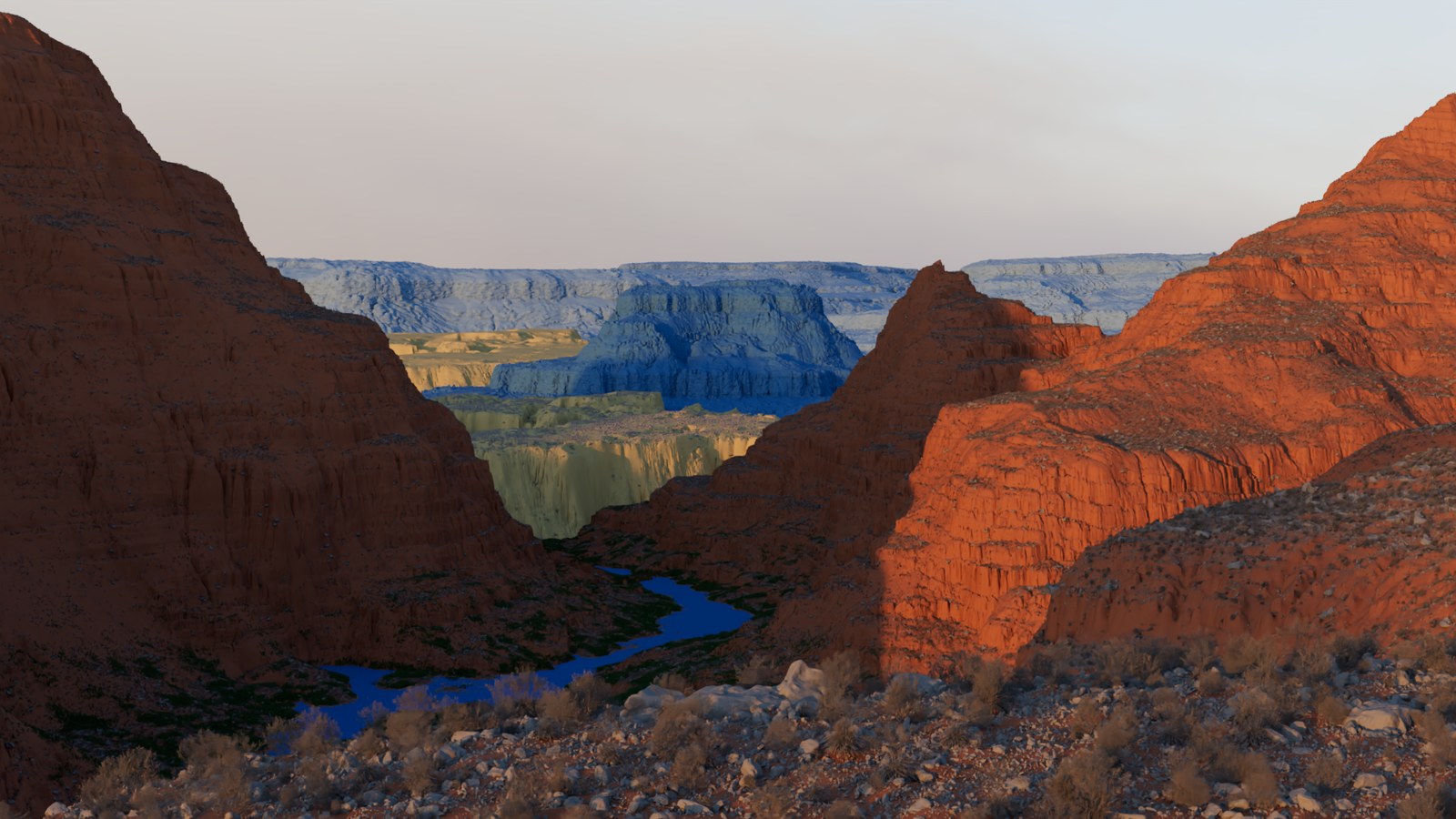
A set dressed for one lens, not a continuous landscape: near walls, one mesa mesh reused as the butte and the far mesas, and a canyon floor at two scales. Off-frame proxies only cast shadows.
Every instancer culls outside the frustum and below half a pixel; the floor is subdivided and displaced only where the camera sees it and doesn't interfere with scattered points.
Forms
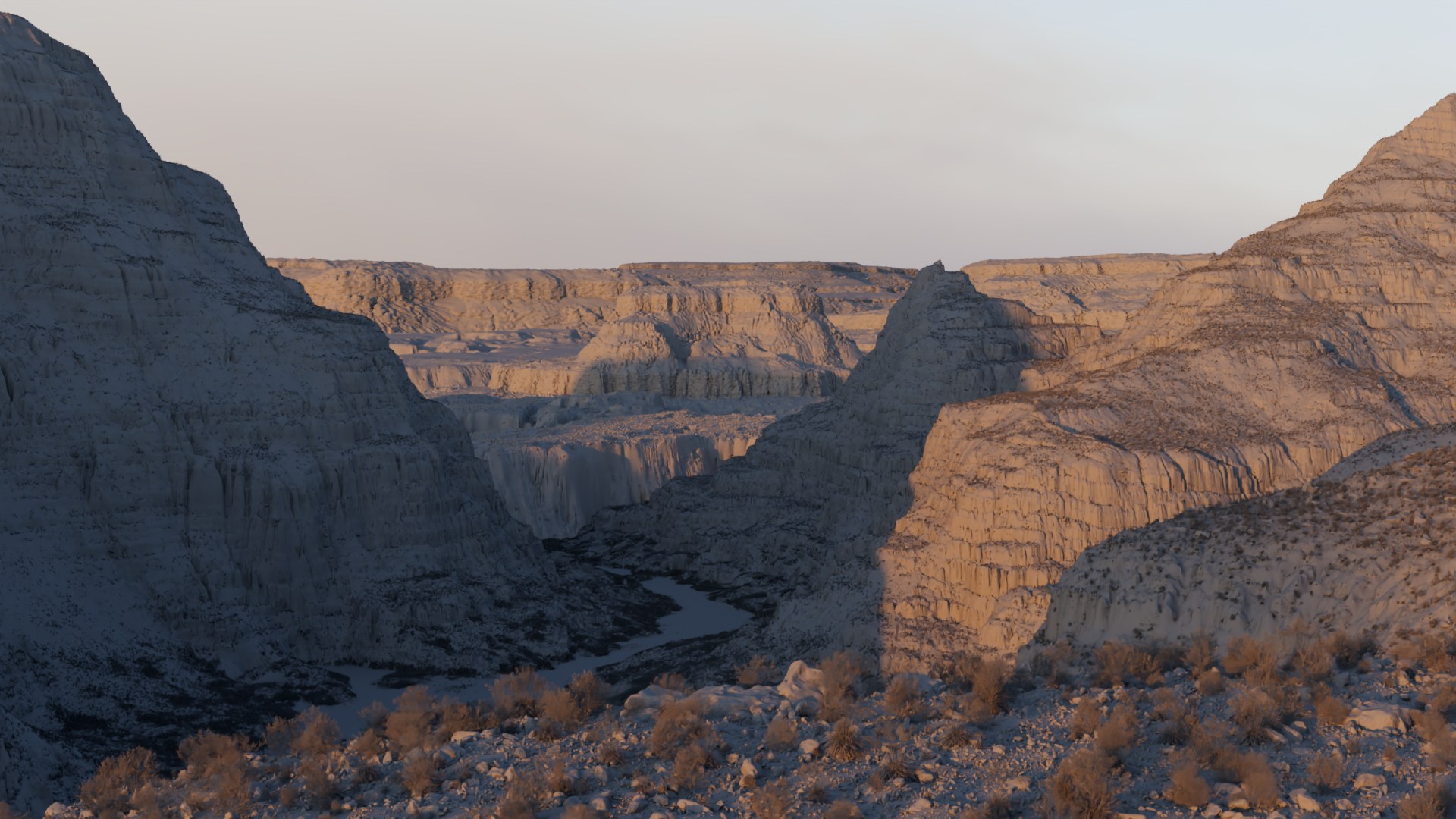
Mesas from a rock column
A Gaea base terrain, remapped in Houdini through a rock-column profile: hard beds stand as cliffs, soft beds weather back to slopes. Erosion cuts the gullies; a scanned-rock shell adds the surface.
Render-time displacement adds bedding ledges, joints and slumped blocks to the far mesas, floor and butte. The near cliffs get the same in SOPs, steep faces only, so the scatters stay grounded.
Weathering
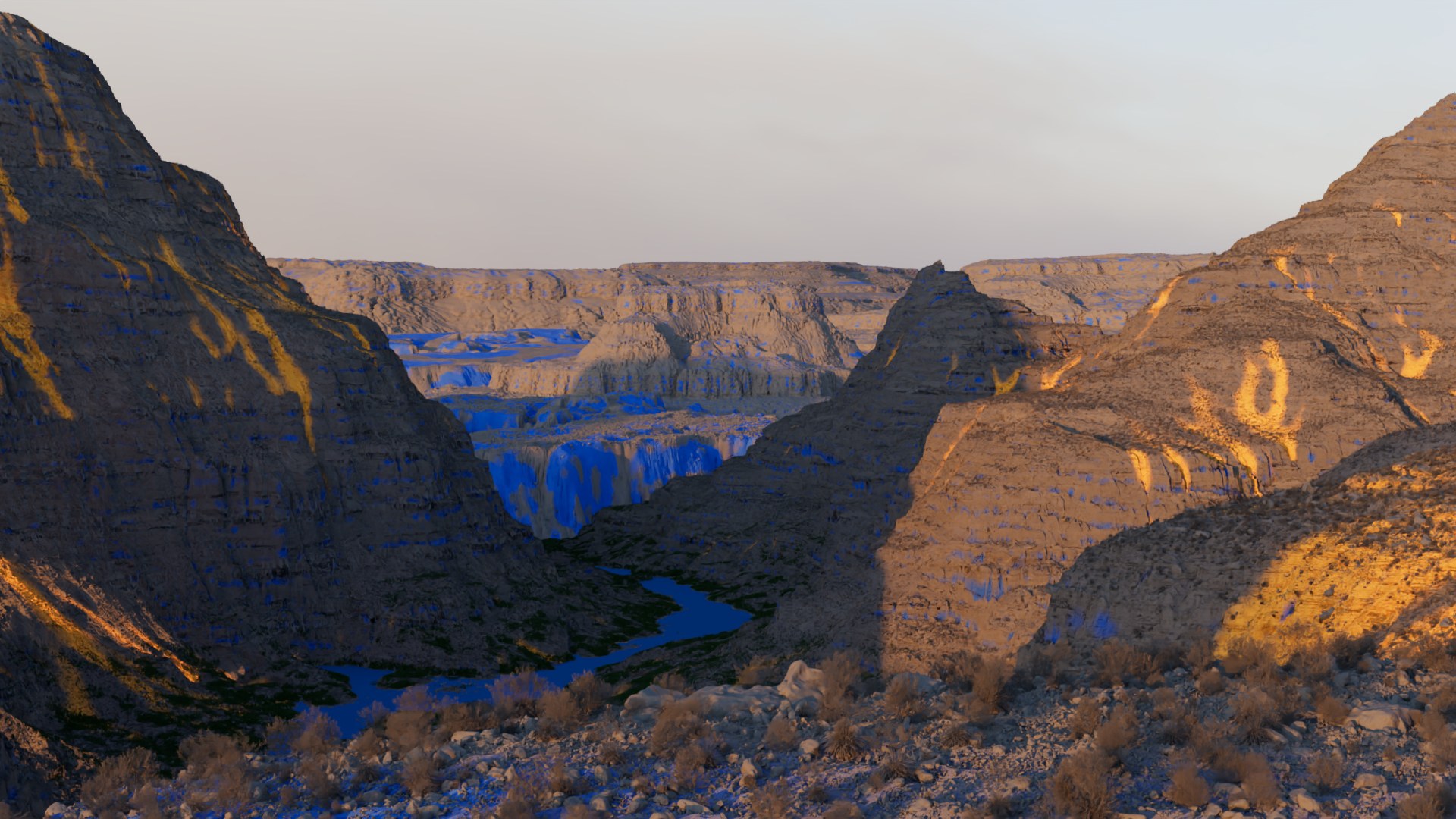
Where the water runs
A geometry pass computes flow, cavity, occlusion and edge masks on every cliff mesh. The materials use them for desert varnish, crack darkening and edge wear, matched between the near walls and the mesas.
Materials
One rock, many layers
One scanned sandstone on every wall. The mesas layer height-driven strata colors, streaks and grain in world space, so scaled copies keep their texel scale. Albedo is matched to the near walls on an albedo-only render.
Weather
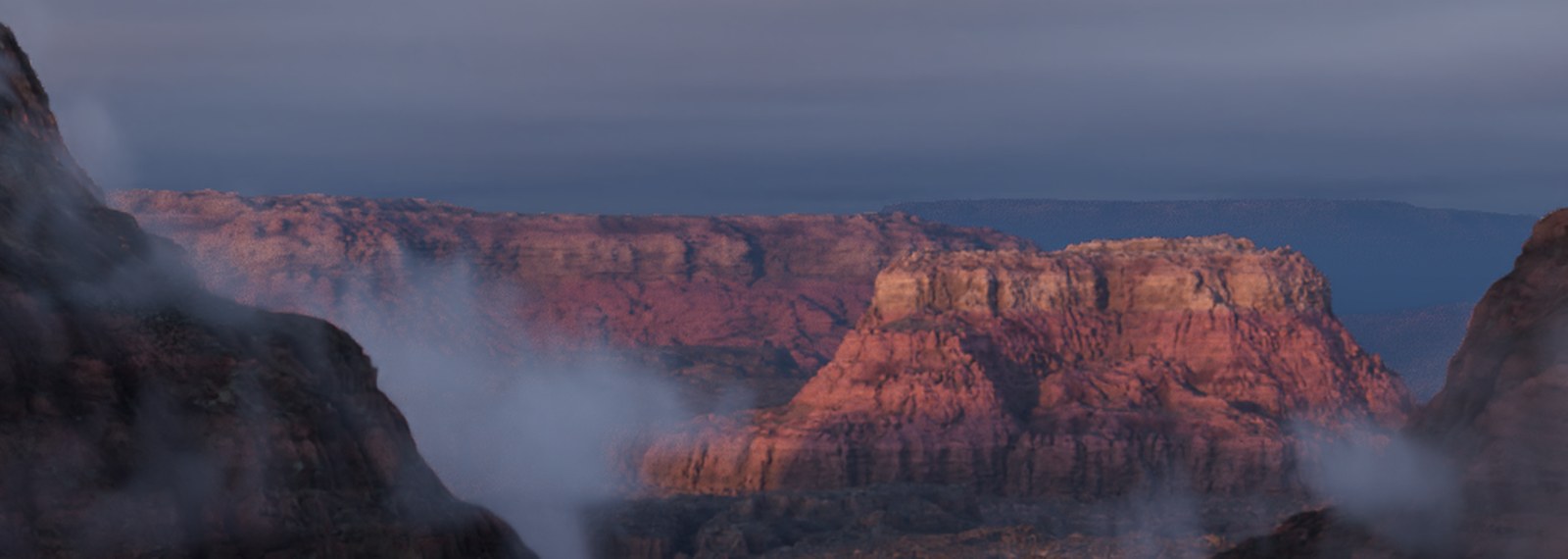
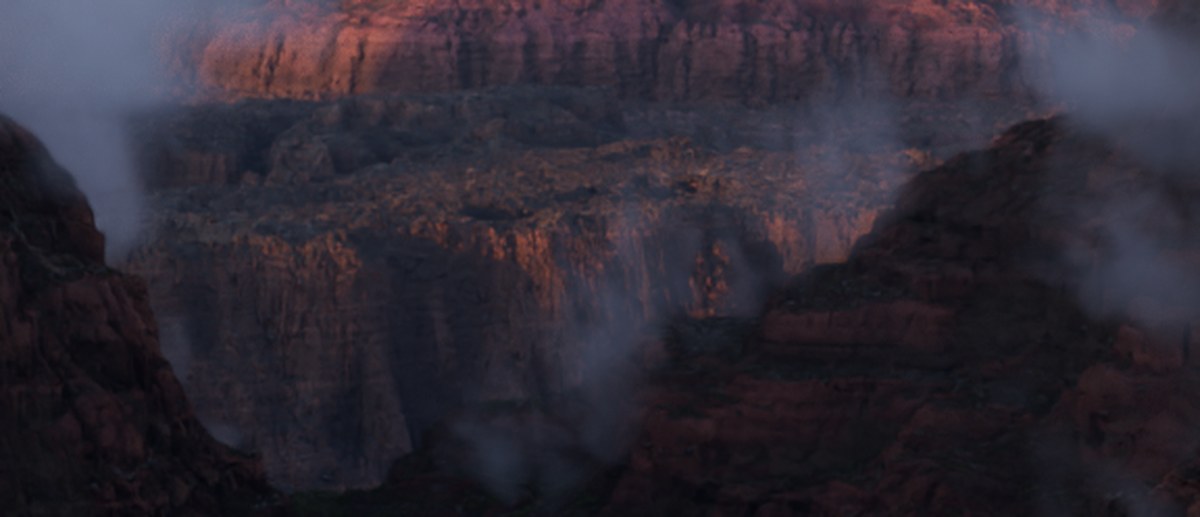
Clouds the canyon makes
Storm fractus grown from the environment, not placed by hand: sources in the gullies (from the flow masks) and along the walls below the rim, advected by a short wind solve with curl turbulence.
Art-directed for the frame: thinned in front of the center peak, and the gorge plume gets its own 1 m volume where the 3 m grid fell below a pixel.
Render
Two passes, one comp
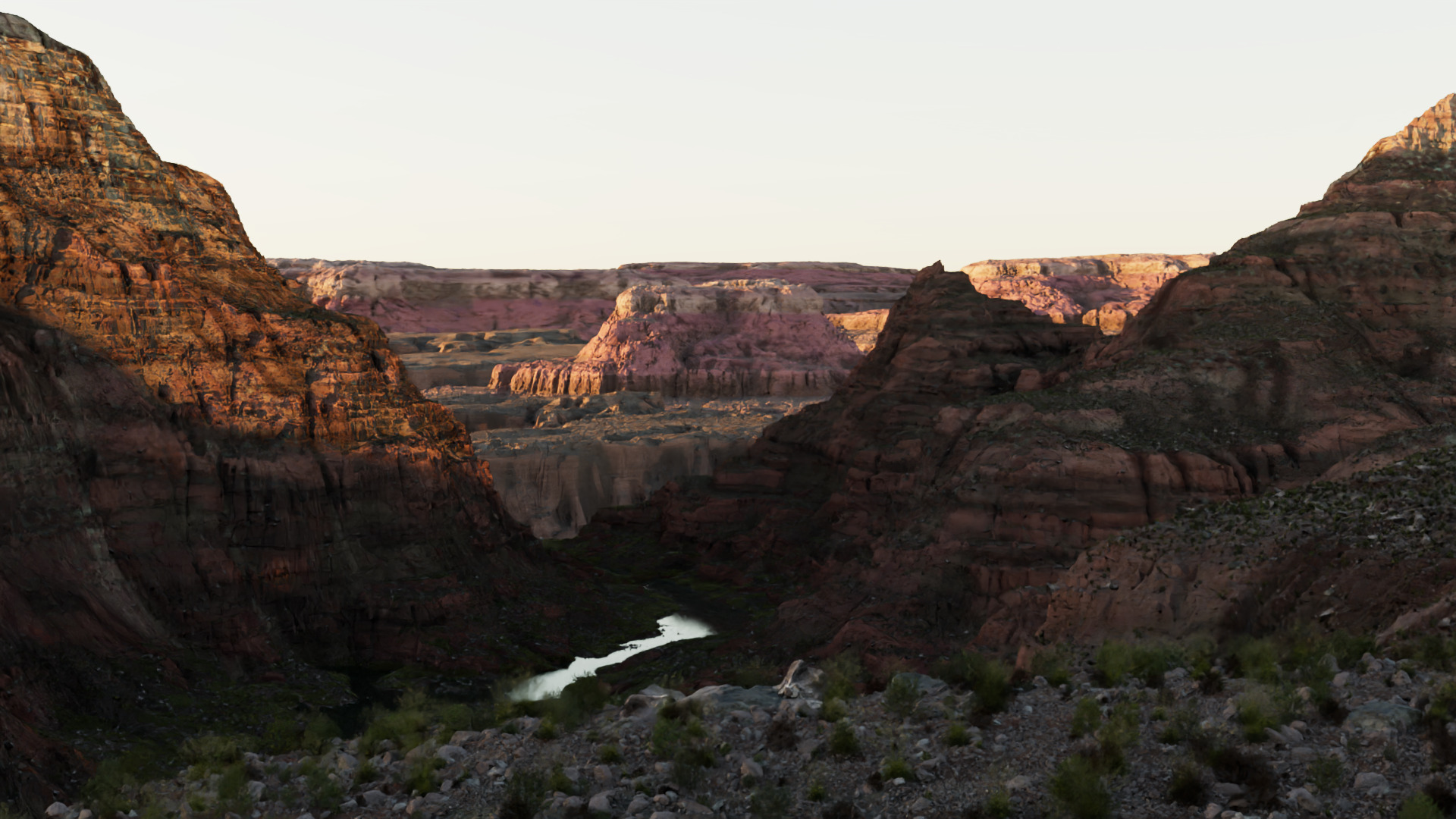
Surfaces and depth in one pass; clouds and haze in another with the terrain as holdout, so the weather iterates without re-rendering surfaces. Comped in scene-linear ACES, with silhouette edges rebuilt against the sky.
- 2.5 minsurface pass, 1920 × 1080, Karma XPU
- 9 minvolume pass: storm clouds and haze, from 22 min
- ACEScomp in scene-linear, SDR video view
Light experiments
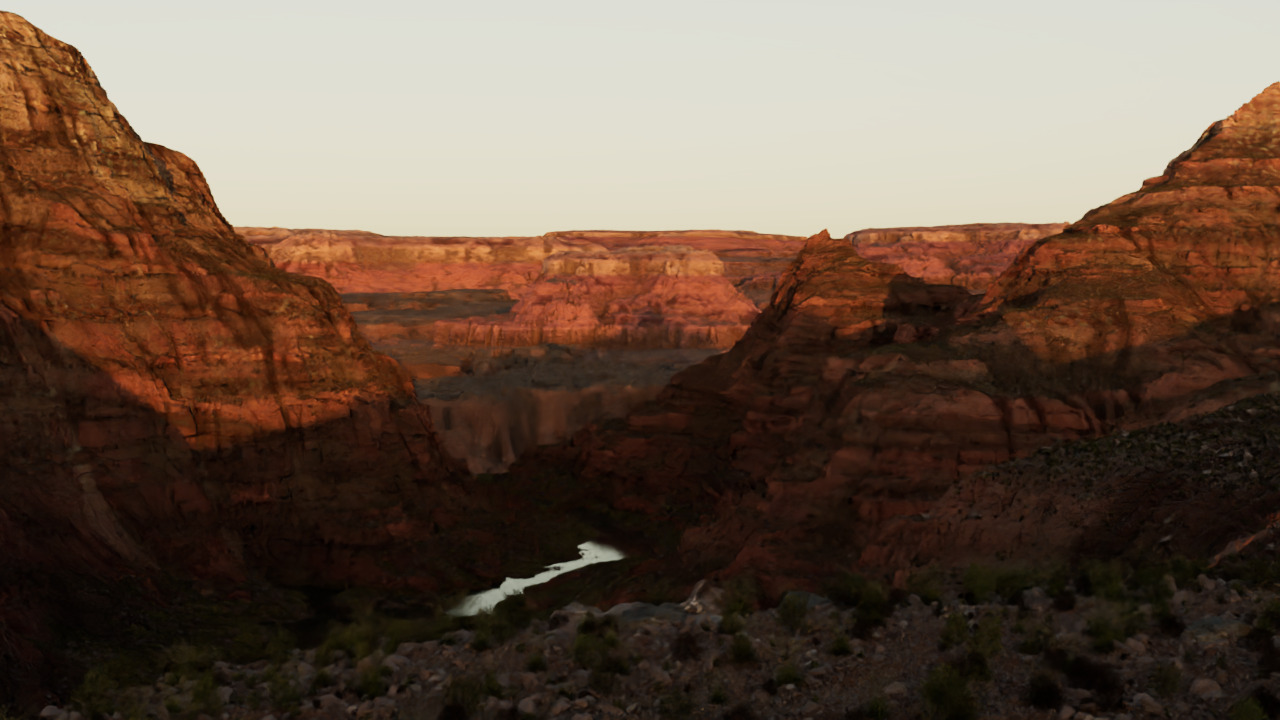
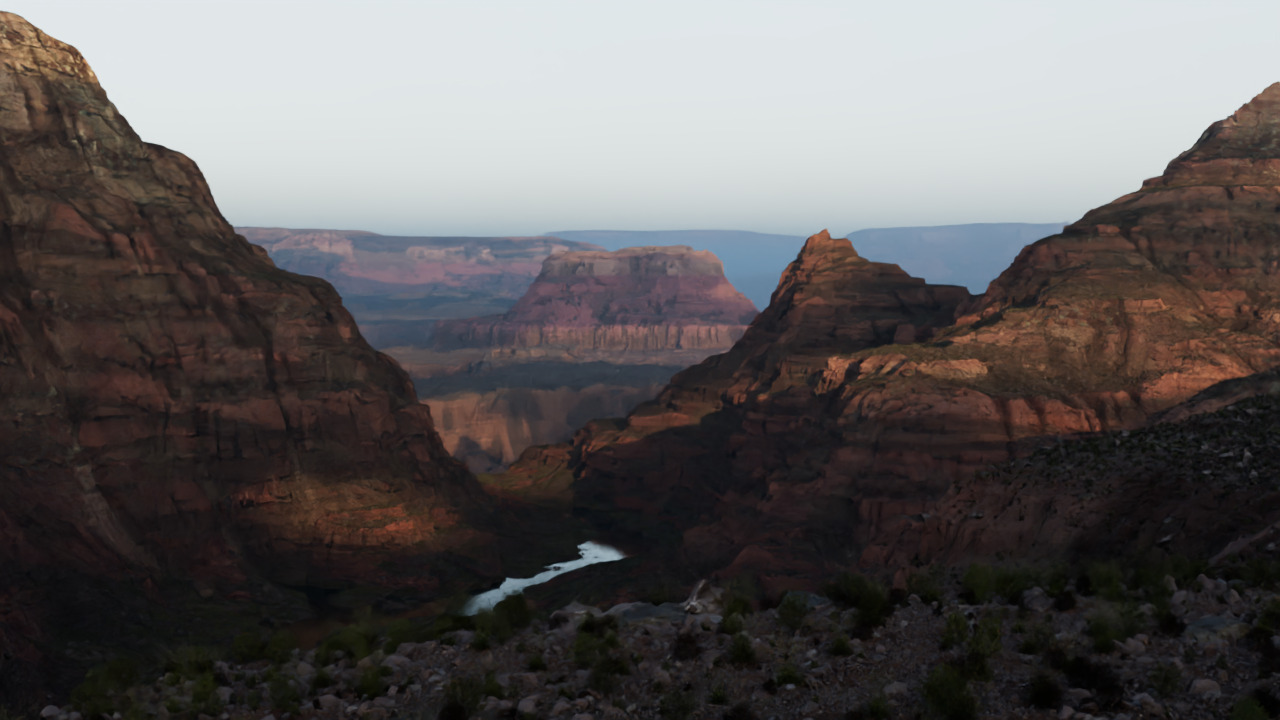
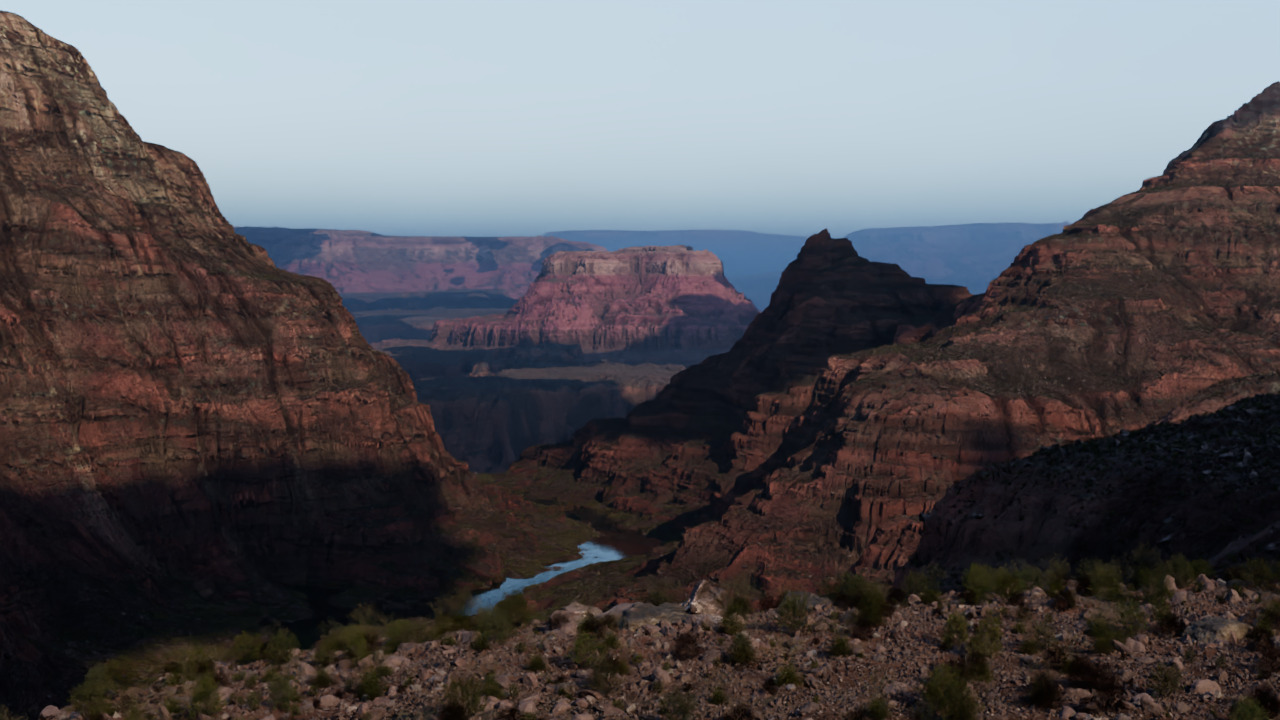
One scene, many skies
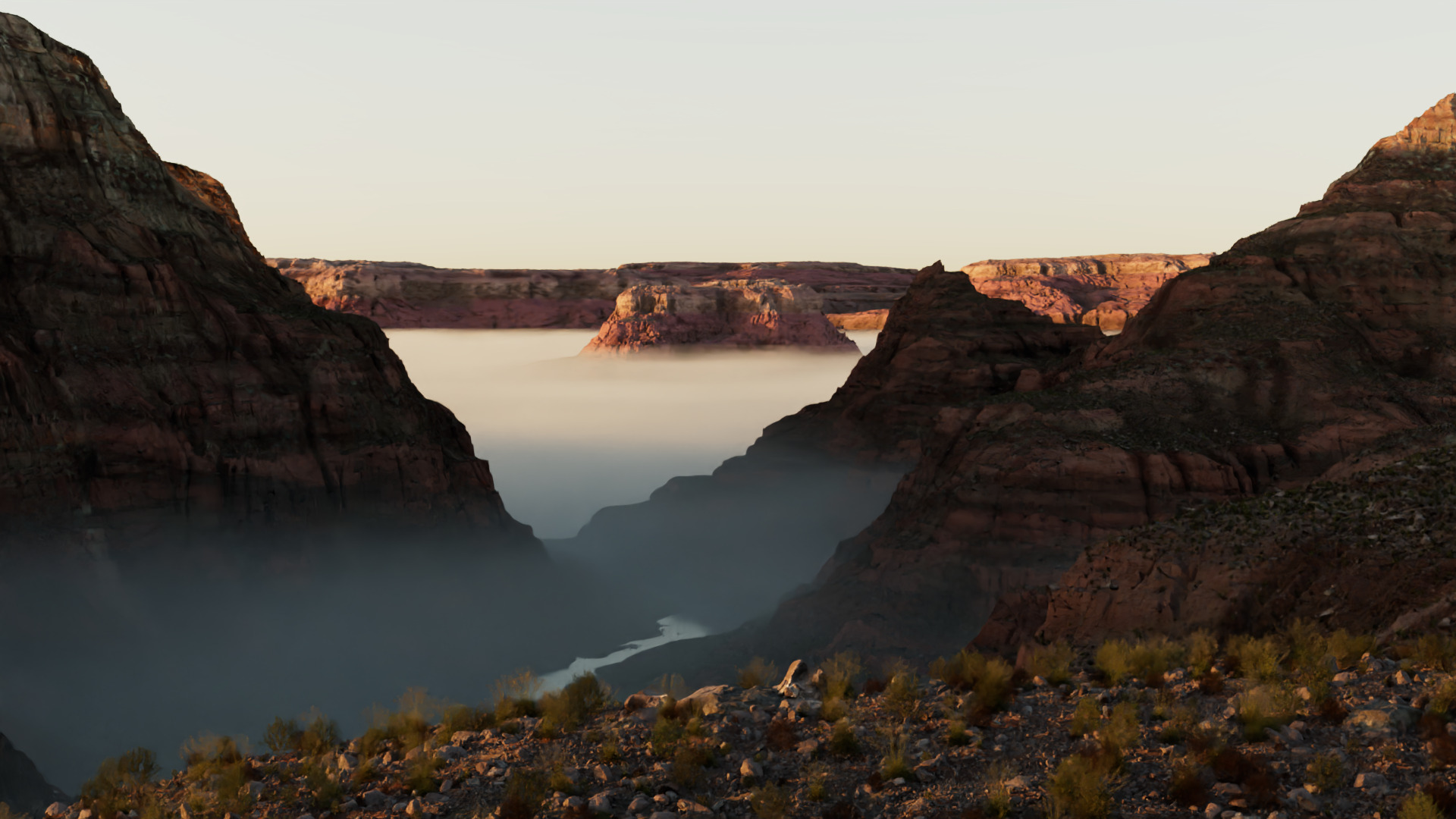
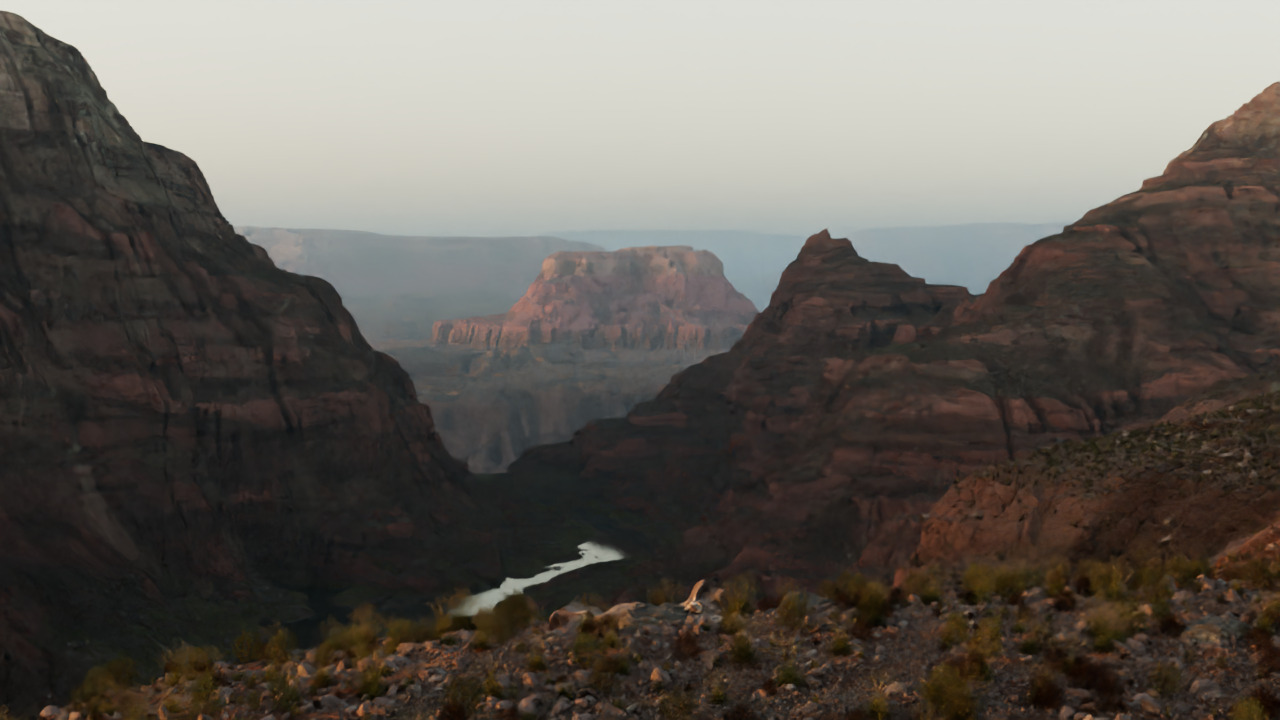
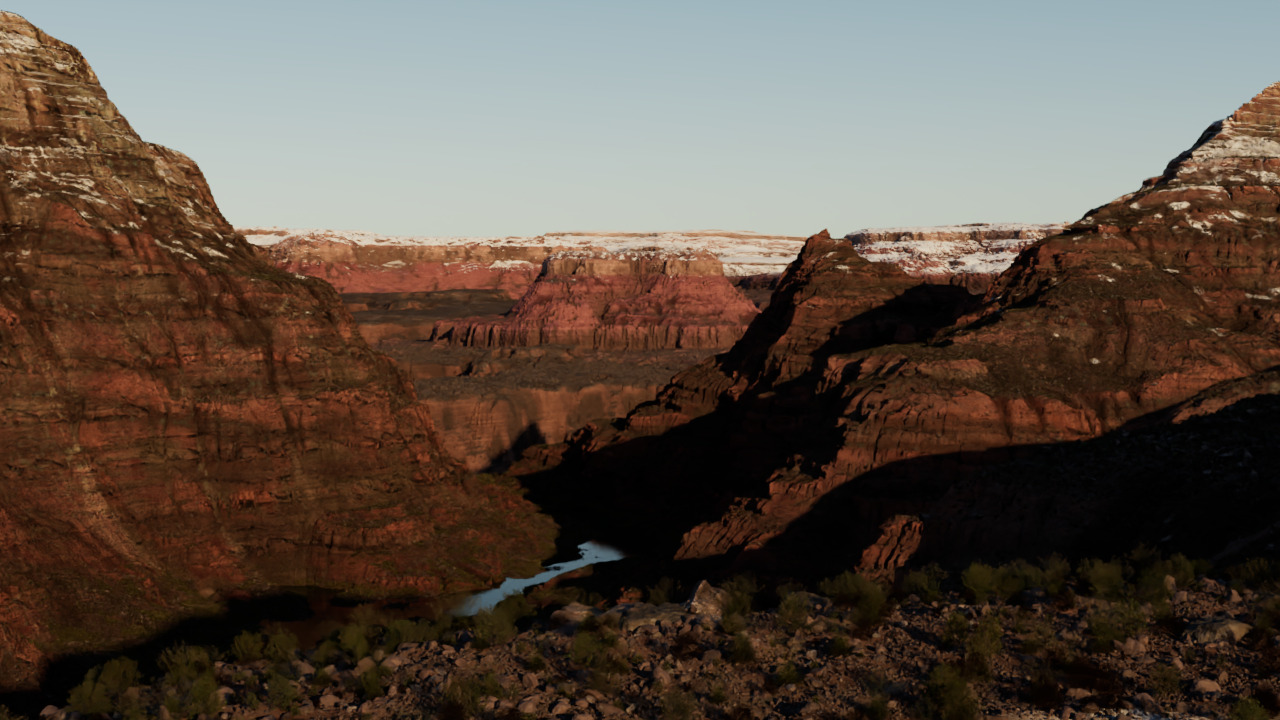
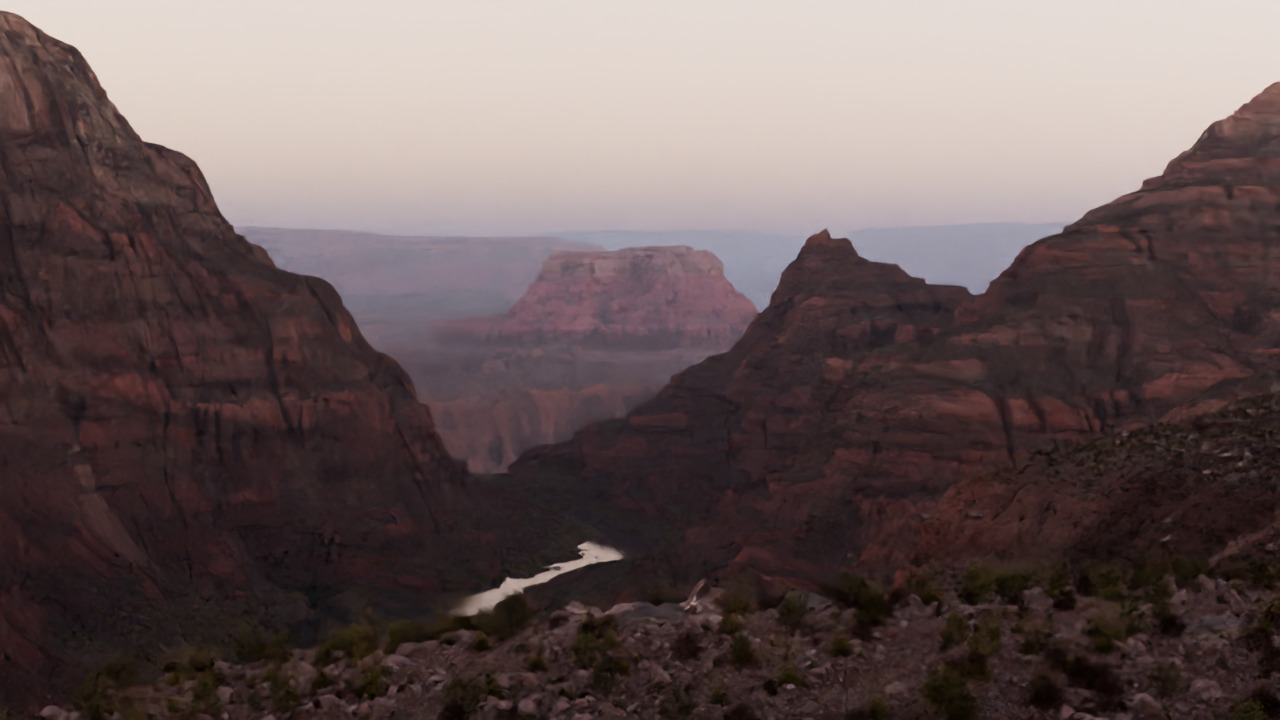
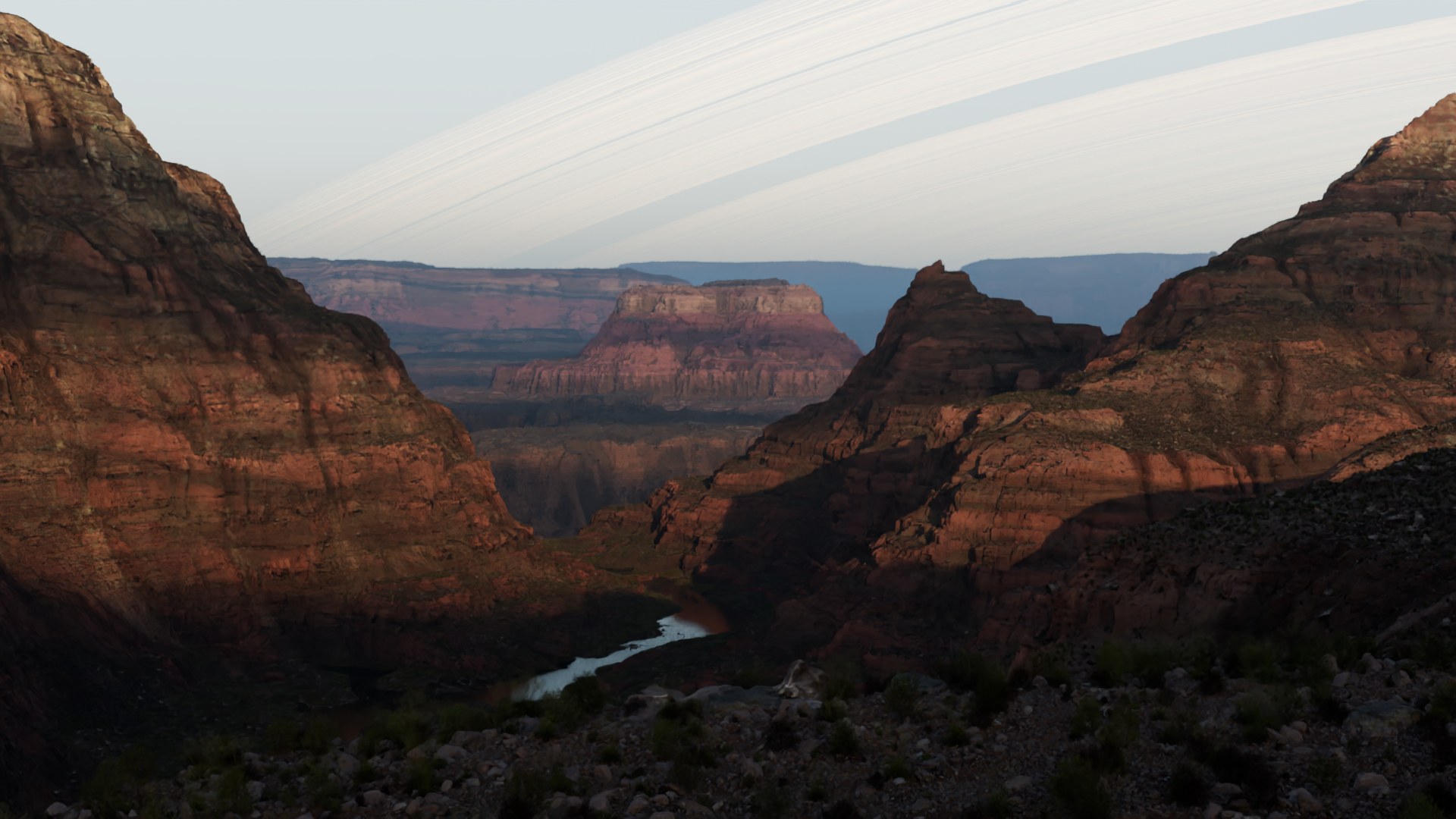
Fourteen lighting setups on the finished scene, physical sky with the sun placed relative to camera, all kept as switchable options. Cloud shadows from a shadow-only plane, sunrise fog from height-falloff layers, and a ring sky from my planet atmosphere node, with the ring's shadow cast across the canyon the same way.
Tools: Houdini 22, Solaris, Karma XPU, MaterialX, VEX and Python; Gaea for the base terrain; Quixel rock scans; Maxtree plants.